Laundry Management Software: How to Track Orders, Garments and Deliveries
A busy laundry business can receive dozens or hundreds of garments in a day. Each order may contain different clothing items, cleaning instructions, prices, and delivery requirements. When these details are recorded in paper registers or disconnected spreadsheets, it becomes harder to answer a simple question: Where is the customer's order right now?
Laundry management software helps businesses record customer orders, track processing stages, manage billing, and coordinate collections or deliveries. The right workflow makes it easier for staff to identify garments, provide accurate updates, and resolve problems before they become customer complaints.
For laundry and dry-cleaning businesses across Saudi Arabia, the UAE, Oman, and other GCC markets, organized order tracking can support more consistent daily operations.
Why Laundry Businesses Need Better Order Tracking
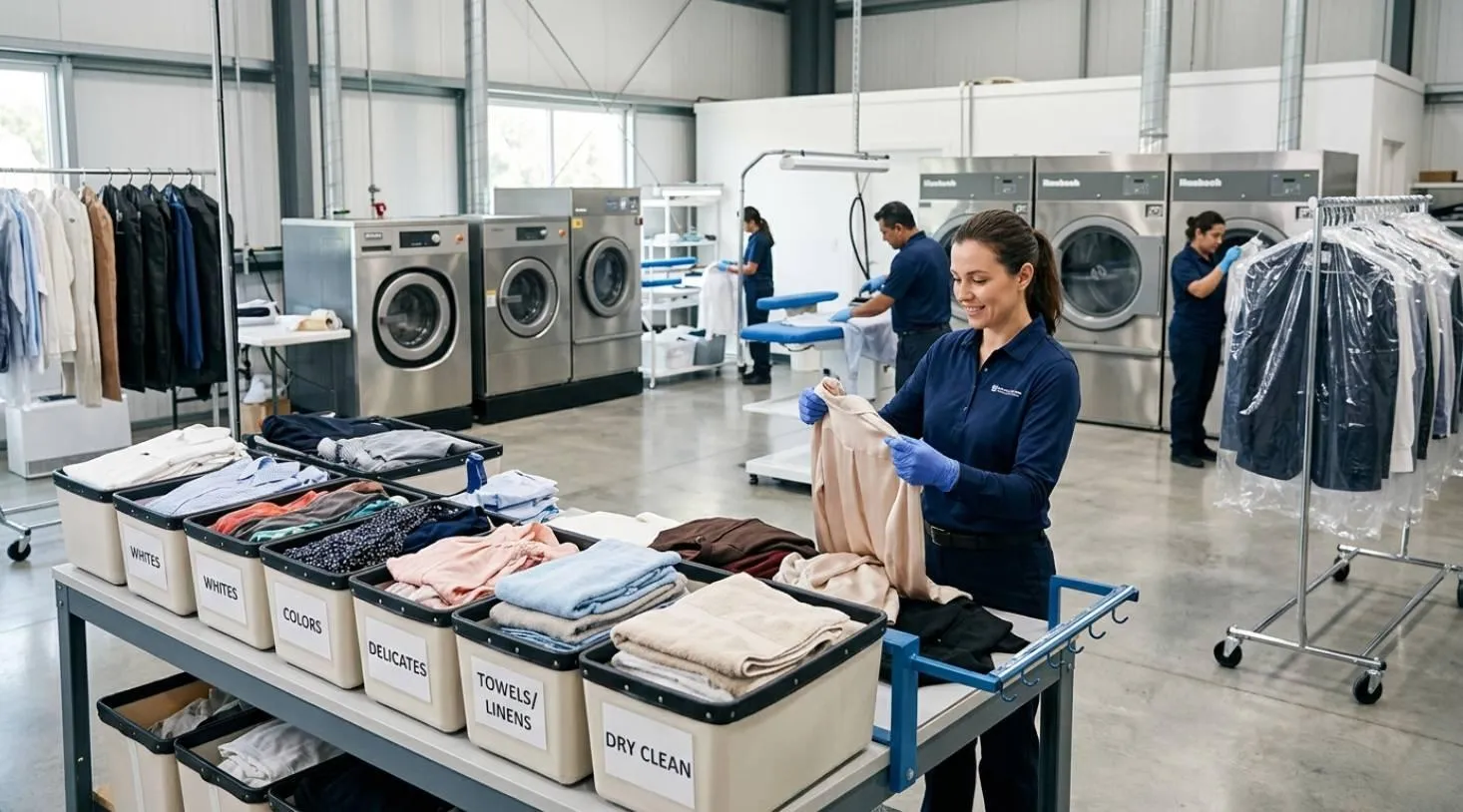
Laundry operations involve more than receiving clothes and returning them clean. Staff must identify individual items, apply the correct services, record special instructions, track processing, and make sure the completed order reaches the right customer.
A paper-based process can become difficult to manage as order volumes increase.
Common problems include:
- Garments being associated with the wrong customer.
- Special cleaning instructions being overlooked.
- Staff being unable to locate an order quickly.
- Incorrect prices or missing service charges.
- Delays that are not communicated to customers.
- Confusion between completed orders and orders awaiting collection.
- Delivery mistakes involving multiple customer addresses.
A consistent digital workflow helps staff find order information without relying entirely on handwritten notes or individual memory.
What Is Laundry Management Software?
Laundry management software is a business system used to manage customer orders, garment processing, pricing, payments, and related operational activities.
Depending on the solution, it may also support barcode or tag-based tracking, customer notifications, pickup and delivery scheduling, and reporting.
For example, when a customer submits five garments for cleaning, the business can create an order record containing the customer's details, garment descriptions, selected services, expected completion date, and payment information.
As staff process the order, they update its status. The counter team can then check whether the order is being processed, ready for collection, or awaiting delivery.
The available features vary by provider, so businesses should confirm which tracking and notification functions are included before selecting a system.
How a Digital Laundry Order Workflow Works
1. Register the Customer Order
When garments arrive, record the customer's contact information, the items received, requested services, and any special instructions.
Inspect garments according to the business's procedures and record pre-existing damage or other relevant conditions where appropriate.
Provide an order receipt that identifies the transaction and explains the expected collection or delivery arrangements.
2. Identify Garments and Link Them to the Order
Every item must remain associated with the correct customer order throughout processing.
Businesses can use suitable garment tags, order labels, or barcode-based identification, depending on their workflow and equipment.
The purpose is to make it possible for staff to identify the order and its contents at each processing stage without relying on memory.
3. Track Processing Status
Divide the workflow into clear stages, such as:
- Received
- Sorting and inspection
- Cleaning
- Drying or finishing
- Quality check
- Ready for collection
- Out for delivery
- Completed
Not every garment requires the same processing steps. The system should allow staff to follow the workflow appropriate to the services offered.
Status updates also help the counter team answer customer questions without repeatedly contacting the processing area.
4. Record Quality Checks
Before an order is marked ready, staff should check that the required services have been completed and the correct items are present.
A quality-control checklist can include garment count, finishing, packaging, special instructions, and any issue requiring customer attention.
If an item needs additional work, the order should remain in the appropriate status until the issue is resolved.
5. Manage Payments and Collection
Record the agreed charges, discounts, deposits, outstanding balances, and final payments according to the business's policies.
When the customer collects the order, staff should verify the order reference and follow the business's handover procedure.
For delivery orders, record the relevant dispatch and completion details so that staff can investigate any delivery questions later.
How to Reduce Lost Garments and Order Mix-Ups
Garment identification is one of the most important controls in a laundry operation.
First, assign each customer order a unique reference. Where practical, use item-level labels to distinguish individual garments within an order.
Second, make handovers between processing stages traceable. Staff should know which items were received, which stage they entered, and whether the order has passed its final check.
Third, investigate discrepancies immediately. If an order contains fewer items than expected, pause the handover and review the recorded garment count and processing history.
Finally, establish a clear procedure for damaged garments, missing items, re-cleaning requests, and customer complaints.
Software can make records easier to access, but reliable results also depend on staff training and consistent operating procedures.
How to Improve Laundry Pickup and Delivery Management
Pickup and delivery services add another layer of coordination.
A laundry business may need to schedule customer collections, assign deliveries, record addresses, and communicate expected completion times. Without an organized process, orders can be ready at the shop but missed during dispatch, or deliveries can be assigned without considering route and timing.
A practical delivery workflow should record the customer, order reference, address, promised time window, delivery status, and any payment due.
Businesses handling many deliveries may also benefit from route planning and grouping orders by location. The suitability of these features depends on delivery volume, geography, and the software available.
Customer notifications can be useful when an order is ready, dispatched, delayed, or delivered. If the selected system does not support automated messages, staff can use an approved communication process and record the outcome.
Choosing Laundry Management Software
Before choosing a system, laundry owners should evaluate the workflow they actually need.
Important questions include:
- Can staff create customer orders and record individual garment details?
- Does the system support order references, tags, or barcode-based tracking?
- Can staff update processing statuses and locate orders quickly?
- Can it manage service prices, discounts, deposits, and outstanding payments?
- Does it support pickup and delivery workflows?
- Can customers receive order status notifications?
- Can managers review sales, outstanding orders, and daily collections?
- What happens when internet connectivity is interrupted?
- Can the system support additional branches if the business expands?
Request a demonstration using a realistic order that includes several garments, a special instruction, a delayed item, and a delivery request. This helps reveal whether the software supports the actual workflow rather than just a basic billing transaction.
How WaslaSoft Fits Into Laundry Operations
WaslaSoft lists a laundry solution with capabilities including order tracking, billing, pickup and delivery, customer messaging, and pricing tiers.
Laundry businesses evaluating the platform should confirm the specific garment identification, processing-status, notification, and delivery functions available in their intended configuration.
A suitable system should help employees access order information, maintain accurate billing records, and coordinate the movement of garments through the business.
Final Thoughts
Good laundry order management depends on clear identification, reliable status updates, accurate billing, and controlled handovers.
Laundry management software can help organize these activities, but businesses should also establish consistent procedures for garment inspection, quality control, collection, and delivery.
Start by mapping the journey from the moment a garment arrives to the moment it is returned to the customer. Then choose software that supports those steps without adding unnecessary complexity.
Explore WaslaSoft to learn more about its laundry and business management solutions.
Frequently Asked Questions
What is laundry management software?
Laundry management software helps businesses record customer orders, manage billing, track processing activities, and coordinate collections or deliveries. Available features depend on the provider.
How can a laundry business prevent garments from getting lost?
Use unique order references, appropriate garment labels, recorded item counts, clear processing statuses, and documented handovers. Investigate discrepancies before an order leaves the business.
Can laundry management software track pickup and delivery?
Some systems support pickup scheduling, dispatch records, delivery statuses, and customer notifications. Confirm the exact features available in the selected product.
How can laundry businesses notify customers when orders are ready?
Businesses can use automated SMS or other supported messaging integrations, or follow a manual notification process. The communication method should be confirmed with the software provider.
What should a laundry business consider before choosing software?
Evaluate order tracking, garment identification, pricing, payments, processing workflows, customer communication, reporting, connectivity requirements, and support for future growth.