Paws on the Scale: How Gulf Veterinary Clinics & Luxury Pet Resorts Synchronize MEWA Microchip Registrations, Boarding Suites, and Controlled Rx Dispensing
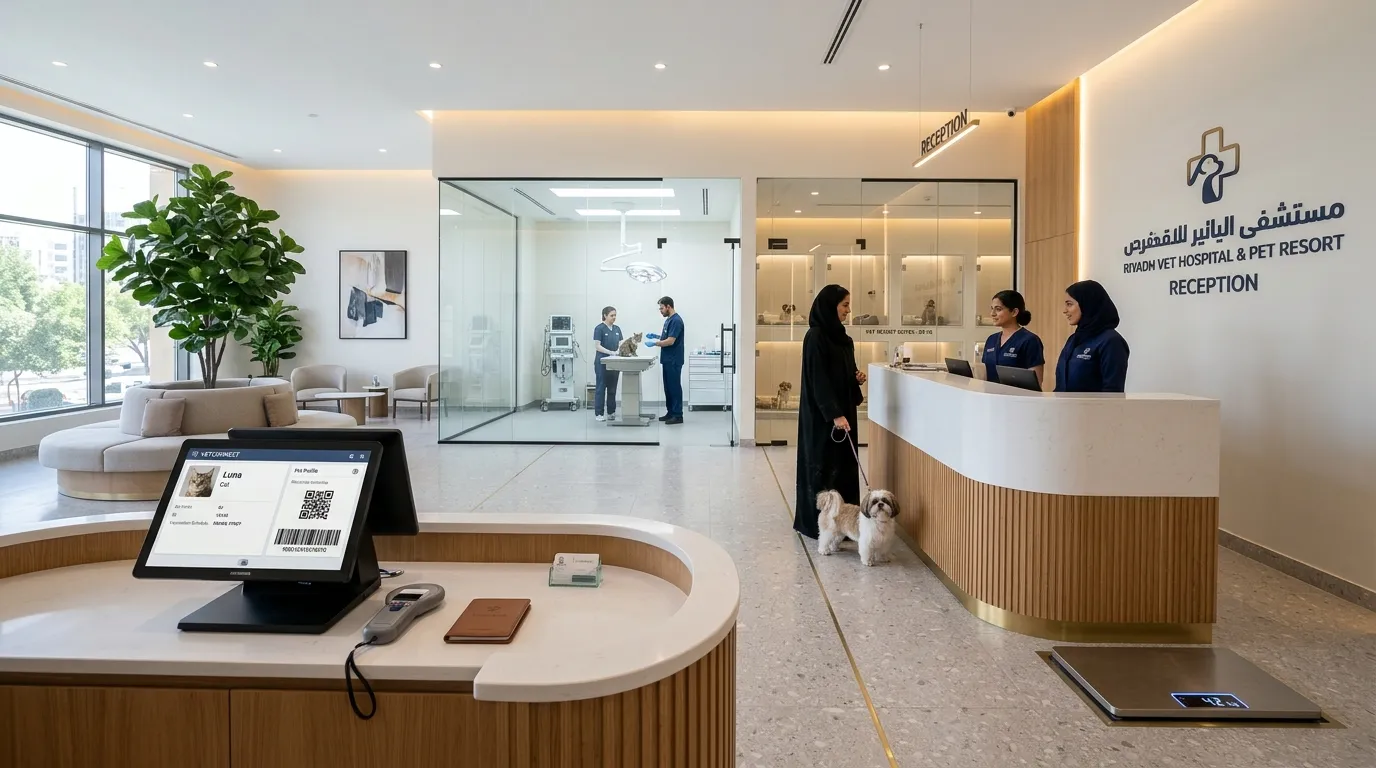
At 11:30 AM on a crowded Saturday in an upscale animal hospital in Riyadh’s Al-Malqa district or Dubai’s Al Barsha, a client walks through the sliding glass doors holding the leash of a prized Arabian Saluki hound. The owner requires an orthopedic hip evaluation, a refill of specialized cardiac medication, and a three-week reservation in an executive climate-controlled boarding suite while he travels to Europe. At that exact moment, an emergency feline patient arrives in an oxygen carrier suffering from acute urinary obstruction.
Behind the marble reception desk, the front-office team is paralyzed by administrative friction. The head receptionist is juggling four separate, disconnected software applications: a local legacy medical records database on an outdated desktop PC, an open Google Sheets calendar tracking kennel reservations, a tablet running a salon booking app for pet grooming appointments, and a standalone retail card terminal used to ring up prescription kidney diet kibble.
The consequences of this operational fragmentation are immediate and expensive. The Saluki’s boarding reservation was accidentally promised to another client because the kennel spreadsheet was not refreshed. The technician preparing the cardiac medication calculates the dosage based on the dog’s weight recorded eight months ago, failing to notice that the animal has lost four kilograms. Meanwhile, the emergency cat’s owner is forced to wait fifteen minutes at the billing counter while the cashier manually calculates medical supply items and attempts to format a compliant tax receipt.
This operational logjam illustrates the unique operational complexity of companion animal care in the Arabian Gulf. Over the past five years, the pet care and veterinary medicine sector across Saudi Arabia, the UAE, Qatar, Kuwait, Bahrain, and Oman has transformed from a cottage service into a multi-billion-riyal modern industry. Driven by evolving cultural attitudes, expatriate family demographics, and expanding regulatory frameworks, Gulf pet facilities are no longer simple neighborhood veterinary offices. Today, they are complex hybrid enterprises combining an acute medical hospital, a specialized clinical laboratory, a controlled pharmacy, a luxury pet boarding hotel, a professional grooming spa, and an upscale retail pet boutique under one roof.
Running such a multi-faceted operation with generic point-of-sale software or basic human clinic software is a recipe for medical errors, regulatory penalties, and inventory loss. Achieving sustainable clinical and commercial excellence requires a unified platform engineered specifically for veterinary operational workflows: WaslaSoft Veterinary and Pet Care POS.
1. The Multi-Headed Beast: Why Veterinary Operations Are Five Businesses in One
In standard commercial commerce, a business model fits into a clean category: it is either a retail store, a specialized service salon, a medical practice, or a hospitality lodging venue. A modern full-service veterinary hospital and pet resort in the Gulf is all five simultaneously.
The 5 Integrated Pillars of the Gulf Veterinary Enterprise
- 1. Clinical EMR & Diagnostics: Consultation records, surgical monitoring, digital imaging, and lab test panels.
- 2. Controlled Veterinary Pharmacy: Weight-based drug dosage calculator (mg/kg), locked narcotic logbooks, and SFDA audit trails.
- 3. Luxury Boarding & Daycare: Climate-controlled suites, biosecurity vaccination verification, and feeding schedules.
- 4. Professional Grooming Spa: Breed-specific styling, coat condition surcharges, and labor-only stylist commission splits.
- 5. Nutritional Pet Boutique: Veterinary prescription diets, dietary supplements, and therapeutic care accessories.
When clinic owners attempt to stitch together separate single-purpose software solutions—such as an open-source medical record tool, an independent salon appointment app, an off-the-shelf hotel booking tool, and a generic retail cash register—the business breaks down at the seams:
- Lost Charge Capture: Technicians administer anesthesia, surgical catheters, wound dressings, and blood test panels in the treatment room, but fail to record them on paper billing sheets. By the time the patient is discharged at reception, up to 20% of billable clinical supplies walk out the door unbilled.
- Double-Booked Facilities: Boarding suites and grooming tables are booked on separate tablets without visibility into the pet’s clinical status. An aggressive or un-vaccinated dog is placed in a general boarding playgroup, creating catastrophic liability risks.
- Fragmented Patient Profiles: The retail cashier does not know that the client buying adult dog food has a puppy diagnosed with severe gastrointestinal allergies in Exam Room 2. The clinic misses the opportunity to guide the client toward veterinarian-prescribed therapeutic diets.
WaslaSoft unifies all five operational pillars into a single relational database centered on the Patient-to-Pet-Parent CRM architecture. Every interaction—from a routine rabies vaccine booster to a three-night boarding stay or a bag of therapeutic renal cat food—ties back to the pet’s electronic health passport and the owner’s unified billing ledger.
2. Microchip Telemetry: Enforcing MEWA and Municipal Compliance
In Saudi Arabia, the Ministry of Environment, Water and Agriculture (MEWA) enforces strict identification regulations requiring all companion animals to be permanently identified with an implanted 15-digit RFID microchip conforming to ISO standards 11784 and 11785. Similar strict mandates exist under the Dubai Municipality Department of Public Health and across municipal departments in Abu Dhabi, Qatar, and Bahrain.
The Problem with Manual Microchip Entry
A standard 15-digit microchip string (such as 982000412345678) is nearly impossible to enter manually without error. When busy front-desk staff type microchip numbers on a keyboard, typo rates exceed 8%. A transposed digit means:
- An animal’s rabies vaccination record cannot be validated on government portals during export or municipal inspections.
- Lost pets brought into the clinic cannot be matched to their rightful owners.
- Insurance claims through pet wellness programs are rejected due to mismatched biometric identifiers.
Direct RFID Scanner Integration in WaslaSoft
WaslaSoft interfaces directly with handheld Bluetooth and fixed USB RFID microchip scanners. The moment an animal arrives at reception, the technician scans the microchip between the shoulder blades:
WaslaSoft Patient Identification Protocol
- Scanned Microchip String: 982000412890432 (ISO 11784/11785 Verified)
- Patient Profile: Buster | Male Neutered | Golden Retriever | 3 Years, 4 Months
- Registered Guardian: Mohammed Al-Otaibi | +966 50 123 4567 | Al-Malqa, Riyadh
- MEWA Registry Status: Active & Compliant (Certificate #SA-2025-99812)
- Core Vaccination Status: Valid until November 2027 (Rabies, DHPP, Leptospirosis)
- Active Clinical Alerts: History of cutaneous allergy to penicillin; reactive toward unfamiliar male dogs.
The receptionist does not touch the keyboard. The entire patient chart, active medical warnings, past surgical history, and current medication regimen populate the screen in less than two seconds, guaranteeing clinical safety before the veterinarian enters the consultation suite.
3. Weight-Based Pharmacokinetics & Controlled Veterinary Substance Tracking
Prescribing medication to veterinary patients is fundamentally distinct from human pharmacy practice. In adult human medicine, a standard 500mg tablet often suffices for most patients. In veterinary medicine, patients range from a 1.2-kilogram Chihuahua puppy to an 85-kilogram Caucasian Shepherd dog. Administering medication based on guesswork or outdated historical weights can lead to therapeutic failure or fatal drug toxicity.
Direct Digital Scale Integration
WaslaSoft connects directly via RS-232 and Bluetooth to walk-on digital floor scales embedded into the reception floor or triage examination tables.
When the dog walks onto the platform, the telemetry reading stabilizes and transmits the precise mass directly into the patient’s active clinical consultation chart. The system maintains a historical weight velocity curve, alerting the clinician to unexpected weight loss (a primary early indicator of renal disease or feline hyperthyroidism).
Dynamic Weight-Based Dosage Engine
When the veterinarian selects a prescription pharmaceutical, the WaslaSoft dosing calculator executes the clinical formula automatically:
$$\text{Required Volume (mL)} = \frac{\text{Patient Weight (kg)} \times \text{Target Dose (mg/kg)}}{\text{Concentration (mg/mL)}}$$
| Drug Compound | Patient Weight | Target Dose Rate | Stock Concentration | Calculated Dispensing Quantum |
|---|---|---|---|---|
| Amoxicillin / Clavulanate | 4.5 kg (Cat) | 12.5 mg/kg | 50 mg/mL Suspension | 1.13 mL twice daily for 7 days |
| Meloxicam (NSAID) | 28.0 kg (Dog) | 0.2 mg/kg (Loading) | 1.5 mg/mL Oral Liquid | 3.73 mL single loading dose |
| Enrofloxacin (Antibiotic) | 12.0 kg (Dog) | 5.0 mg/kg | 50 mg Tablet Formulation | 1.20 Tablets (1 whole + 1/4 tablet) |
The point of sale generates prescription labels automatically, complete with animal name, weight, dispensing date, administration instructions in Arabic and English, and expiry dates, eliminating handwritten prescription errors.
The Electronic Controlled Substance Register (ECSR)
Veterinary clinics maintain stocks of controlled anesthetics and analgesics—including Ketamine hydrochloride, Buprenorphine, Butorphanol, and Diazepam—subject to strict regulation by the Saudi Food and Drug Authority (SFDA) and regional ministries of health. Discrepancies between physical inventory and paper logbooks result in severe fines, suspension of veterinary practice licenses, or criminal investigation.
WaslaSoft incorporates an encrypted Electronic Controlled Substance Register:
- Double-User Authorization: Dispensing a controlled substance requires dual credential verification (the attending surgeon's PIN and the veterinary nurse's biometric sign-off).
- Mandatory Surgical Case Linking: No controlled vial can be deducted without selecting an active surgical patient record and specific procedure code.
- Wastage and Ampoule Accountability: If a surgical protocol requires 0.8 mL of a 1.0 mL single-use ampoule, the remaining 0.2 mL is flagged as mandatory medical waste, requiring witness signature verification before the transaction is closed.
- Instant Ministry Audit Exports: Generates one-click regulatory ledger reports formatted to official SFDA and MEWA compliance templates.
4. Luxury Boarding Suites: Managing High-Season Capacity and Biosecurity
The extreme summer climate of the Arabian Gulf creates an immense seasonal surge in luxury pet boarding. Between June and September, temperatures in Riyadh, Kuwait, Dubai, and Doha routinely exceed 45 degrees Celsius. Families traveling abroad for summer holidays or European vacations place enormous value on premium, air-conditioned boarding suites equipped with indoor exercise yards, webcam streaming, and veterinary oversight.
The Pitfalls of Manual Boarding Management
Managing a 60-suite pet resort using paper charts or spreadsheet grids creates operational disasters:
- Check-Out Overstays: A client delays their return flight by three days without notification. If the suite was promised to another arriving guest, the facility faces emergency overcrowding.
- Disease Outbreaks: Admitting a single dog with an expired Bordetella vaccine into an air-conditioned indoor boarding facility can trigger an outbreak of infectious tracheobronchitis (Kennel Cough) across 50 boarding guests, generating catastrophic reputational damage.
- Dietary & Medical Errors: Administering standard commercial kibble to a boarding dog with chronic pancreatitis because special feeding instructions were written on a loose sticky note.
Automated Health Verification at Booking
WaslaSoft eliminates biosecurity risks by turning clinical health status into an automated gatekeeper for boarding reservations:
WaslaSoft Boarding Intake Checklist
- Suite Allocated: Executive Glass Suite #14 (Climate Controlled, 22°C Monitored)
- Mandatory Vaccine Audit:
- Rabies (Annual Booster): Verified Active (Expires March 2027)
- DHPP / 7-in-1 Core Vaccine: Verified Active (Expires October 2026)
- Bordetella Bronchiseptica: Verified Active (Administered 14 Days Prior)
- External Parasite Treatment: Fipronil Spot-On Applied upon Check-In (Lot #B-7712)
- Dietary Plan: Client-provided prescription gastrointestinal wet food (1 can at 08:00, 1 can at 18:00)
- Daily WhatsApp Care Updates: Automated morning photo dispatch scheduled to owner mobile.
If a pet parent attempts to book a boarding stay online or at the reception desk while an essential vaccine is expired, the system blocks the reservation and automatically books an intake clinical examination and booster vaccination appointment prior to suite admission.
5. The Grooming Salon: Breed Standards, Coat Surcharges, and Staff Splits
Pet grooming is one of the highest-margin service centers in a modern pet wellness facility, but it is notoriously difficult to manage without specialized software. Grooming an obedient 3-kilogram Maltese requires 45 minutes; dematting and styling a neglected 45-kilogram Standard Poodle or Giant Schnauzer can take three hours and require two technicians.
Dynamic Service Duration and Coat Condition Surcharges
WaslaSoft’s grooming calendar adjusts service durations based on breed, size, and coat condition:
- Breed-Specific Time Allocation: Booking a domestic short-hair bath reserves a 30-minute grooming table block; booking an adult Afghan Hound automatically reserves 120 minutes.
- Dynamic Add-On Matrix: Groomers can add standardized service surcharges directly from tablet interfaces:
- Severe Matting and Tangle Removal (+ SAR 120 / + 45 minutes)
- Medicated Antiseborrheic Bath Protocol (+ SAR 85)
- Ultrasonic Teeth Cleaning (+ SAR 150)
- Aggressive Temperament Handling Fee (+ SAR 100)
Transparent Stylist Commission Architecture
Many professional pet groomers in the Gulf operate on base salary plus performance commission structures. Disputes arise when retail product sales or veterinary pharmacy charges are mixed into grooming revenue.
WaslaSoft isolates service labor from retail products:
- Labor Only Calculation: Groomer commissions (e.g., 20% of service ticket) are calculated strictly on styling, bathing, and clipping service fees.
- Exclusion of Retail Goods: High-ticket retail accessories, medicated shampoos, or veterinary antiparasitic collars added to the ticket are credited to retail revenue, preventing inflated commission payouts.
- Multi-Technician Splits: When two groomers collaborate on a large-breed dematting job, the system splits the commission proportionally based on recorded labor hours.
6. Financial Architecture: Wellness Subscriptions, Split Billing, and ZATCA Phase 2
The financial transactions of a veterinary hospital present unique accounting challenges that generic retail cash registers cannot resolve.
Preventive Pet Wellness Subscriptions
Leading veterinary practices around the world are shifting from purely reactive emergency care to predictable recurring subscription models. WaslaSoft provides an integrated Pet Health Club engine:
- Monthly Recurring Direct Debits: Owners pay a predictable monthly fee (e.g., SAR 149/month for adult cats, SAR 220/month for large dogs).
- Automated Entitlement Depletion: The package automatically credits two free physical examinations per year, annual core vaccinations, twelve monthly parasite preventative doses, and a 15% discount on dental scaling and retail diets.
- Churn Prevention: The system tracks unused entitlements, sending automated WhatsApp reminders to pet parents when scheduled preventative treatments are due.
ZATCA Phase 2 Electronic Invoicing Compliance
Under the Saudi Zakat, Tax and Customs Authority (ZATCA) Phase 2 regulations, all commercial veterinary practices, animal hospitals, and pet retail stores must generate cryptographically signed electronic invoices submitted in real-time to the ZATCA Fatoora platform.
WaslaSoft ensures compliance across every veterinary revenue channel:
- B2C Simplified Invoices: Instant cryptographic QR codes printed on thermal receipts for walk-in pet parents paying via Mada, credit cards, or Apple Pay.
- B2B Standard Invoices: Compliant Phase 2 XML invoices with cryptographic signatures and unique UUIDs for commercial kennel operators, government K9 breeding centers, and corporate pet suppliers.
- Split Multi-Category Invoices: A single client invoice can directly combine professional medical consultation fees (exempt or standard VAT rates), boarding hotel room charges, and taxable pet boutique retail items, generating clean audit trails without administrative friction.
7. Frequently Asked Questions (FAQ)
How does WaslaSoft link patient electronic medical records (EMR) with 15-digit ISO microchip numbers?
Under Saudi MEWA and UAE municipal mandates, all domestic pets and companion animals must be identified via an implanted 15-digit ISO 11784/11785 RFID microchip. WaslaSoft integrates handheld and fixed Bluetooth RFID wand scanners directly into the point of sale. Scanning an incoming animal immediately pulls up their complete clinical file: species, breed, verified sterilization certificate, rabies antibody titer test dates, historical vaccination logs, and emergency guardian contact details. This eliminates identity mix-ups during multi-pet household visits.
How does the system calculate pharmaceutical dosages and prevent veterinary prescription errors?
Veterinary pharmacokinetics requires dosing calculated strictly per kilogram of body weight (mg/kg). When an animal steps onto the clinic walk-on digital floor scale, the telemetry reading syncs instantly into the open medical consultation window. When the veterinarian prescribes an antibiotic, NSAID, or anesthetic, WaslaSoft automatically computes the exact liquid volume or tablet fraction required based on the real-time weight reading. If a dosage exceeds recommended toxicological thresholds, the software triggers an active clinical alert requiring veterinary confirmation.
How are controlled surgical anesthetics and narcotics audited to satisfy SFDA and MEWA inspections?
Controlled veterinary pharmaceuticals—including ketamine, buprenorphine, and butorphanol—are strictly audited by government veterinary authorities. WaslaSoft provides a dedicated Electronic Controlled Substance Register (ECSR). Every milliliter dispensed for surgery or sedation must be tied to a specific animal patient ID, attending surgeon license number, and surgical procedure record. Waste ampoule volumes are logged with double-practitioner sign-offs, producing automated audit trails that satisfy unannounced ministry compliance inspections.
How does the boarding reservation module manage climate-controlled suites and mandatory vaccination rules?
Pet resorts in the Gulf experience extreme seasonal demand during summer vacations, Eid holidays, and winter school breaks. WaslaSoft features a visual boarding grid tracking individual glass suites, cat condos, and exercise yards. The booking engine enforces automated health guardrails: it blocks any reservation or check-in if the pet has overdue core vaccinations (such as Rabies, DHPP for dogs, or FVRCP for cats) or missing external parasite treatments, protecting the facility against contagious kennel cough or panleukopenia outbreaks.
How are grooming salon services and stylist commission splits calculated alongside clinical billing?
Full-service veterinary centers frequently combine clinical treatments with professional grooming salons and spa hydrotherapy. WaslaSoft handles breed-specific service durations, coat condition surcharges, and temperament handling fees. The system automatically computes groomer piece-rate commissions based solely on labor service fees, cleanly separating professional fees from prescription medicated shampoo or retail cosmetic add-ons.
How does the financial module handle preventive pet wellness subscriptions and ZATCA Phase 2 e-invoicing?
WaslaSoft enables clinics to offer recurring annual wellness packages—covering routine checkups, biannual dental scaling, annual core boosters, and monthly parasite preventatives—billed via automated monthly recurring direct debits. For all clinic invoices, surgeries, boarding stays, and pet boutique retail sales, the system generates fully compliant ZATCA Phase 2 electronic invoices featuring cryptographic stamps, QR codes, and automated cloud sync.
8. Strategic Action Blueprint for Clinic Directors and Veterinarians
Transforming an animal hospital from a fragmented collection of disjointed departments into an integrated clinical and commercial enterprise follows a clear operational sequence:
- Deploy RFID Microchip Scanners at Reception: Equip all triage and intake desks with Bluetooth wand scanners, mandating that no clinical or boarding admission occurs without verified ISO microchip identification.
- Integrate Digital Floor Scales with Clinical Workstations: Connect walk-on weight platforms directly to the EMR consultation interface, ensuring every prescription reflects verified real-time body mass.
- Digitize the Controlled Substance Safe: Transition from paper narcotic logbooks to WaslaSoft’s double-authenticated Electronic Controlled Substance Register, establishing audit-ready traceability for all SFDA and MEWA inspections.
- Lock Boarding Admissions to Core Vaccination Records: Configure the reservation engine to enforce mandatory vaccine validity periods, eliminating biosecurity risks in shared exercise and lodging facilities.
- Standardize Grooming Surcharges and Commission Splits: Define transparent service pricing matrices based on coat condition and breed size, separating groomer labor commissions from retail product sales.
- Activate ZATCA Phase 2 Cloud Invoicing: Integrate clinic billing terminals directly with the ZATCA platform for instant cryptographic compliance across medical, hospitality, and retail transactions.
Discover how WaslaSoft Veterinary and Pet Hospital POS delivers the operational precision required to protect animal patients, streamline multi-department billing, and scale your pet care enterprise across Saudi Arabia and the GCC.