If your car rental branch is absorbing SAR 20,000 to SAR 45,000 every month in disputed Saher traffic violations, unrecoverable bumper scratches, and credit card chargebacks, your counter software is failing to bind physical vehicle telemetry to financial escrow accounting.
Operating a commercial car rental fleet across Riyadh, Jeddah, Dammam, Dubai, Abu Dhabi, or Muscat is an exercise in high-capital asset utilization. Your vehicles are mobile revenue generators, but every kilometer driven carries operational risk. You are balancing strict statutory oversight from authorities like the Saudi Transport General Authority (TGA / الهيئة العامة للنقل) with complex customer relations, fluctuating insurance liabilities, and rapid vehicle turnover.
Yet, inside dozens of airport counters and downtown rental showrooms, the day-to-day workflow remains perilously manual. Front-desk agents scribble vehicle condition notes on faded yellow carbon-copy sheets. Security deposits are swiped into general operating merchant accounts rather than isolated in automated banking pre-authorization holds. When an automated traffic camera captures a customer speeding at 160 km/h on the Riyadh-Dammam highway six days after vehicle check-in, the rental company discovers that the customer cash deposit was refunded on the spot, turning a SAR 1,000 municipal penalty into a direct hit against bottom-line margin.
Eliminating these financial leaks requires moving away from fragmented spreadsheets and generic retail cash registers. Modern fleet operators require a purpose-built car rental point of sale that integrates directly with government compliance portals, automates payment gateway security escrow holds, and enforces timestamped digital damage inspection workflows. This operational guide details how leading Gulf fleet businesses configure their WaslaSoft POS and ERP platform to achieve zero-leakage fleet accounting and complete TGA Wasl contract compliance.
The Anatomy of Car Rental Margin Bleed: Where the Money Evaporates
Car rental profitability hinges on high vehicle utilization rates, typically targeting 75% to 85% paid days per month across the active fleet. However, gross revenue means little if back-office leakage erodes net EBITDA.
In traditional, un-integrated rental operations, profit bleeds through four primary operational fissures:
Delayed Saher and Traffic Violation Settlements (4% to 7% of Gross Revenue): In Saudi Arabia, automated traffic cameras operated by the Saher system and municipal authorities process violations electronically. Depending on administrative routing, a citation for excessive speed, illegal parking, or red-light crossing can take between 48 hours and 14 days to post to the vehicle registration file on the national Tamm portal. When rental desks rely on manual debit card deposits or cash, they face an impossible trade-off: hold the customer deposit for thirty days and endure angry customer phone calls and online review complaints, or release the money upon vehicle handback and absorb hundreds of unpaid violations every month.
Unenforceable Vehicle Damage Claims (3% to 5% of Fleet Maintenance Costs): Minor vehicle body damage—such as curb rash on alloy rims, bumper scrapes from parking barriers, and gravel pits on windshields—represents one of the most frequent friction points in the mobility sector. When agents use paper inspection sheets, a customer simply denies responsibility, claiming: "That scratch was already there when I picked up the car at the airport terminal." Without high-resolution, timestamped digital photographs linked directly to the signed electronic contract, the rental operator has zero legal standing under Ministry of Commerce consumer protection standards, leaving the fleet to foot the entire body shop repair bill.
Uncaptured Mileage Overages and Fuel Arbitrage: Standard rental agreements in the GCC typically establish a daily allowance of 200 km to 250 km, with excess travel billed at SAR 0.50 to SAR 1.50 per kilometer depending on the vehicle class. When vehicle check-in is conducted manually by lot attendants with pen and clipboard, agents frequently round down odometer readings or fail to notice that an executive customer drove 1,400 km over a three-day weekend. Furthermore, customers regularly return vehicles with the fuel tank at one-quarter full despite receiving it at full tank. If the check-in agent misses the fuel differential, the rental company absorbs the refueling cost.
TGA Wasl Non-Compliance Penalties: The Transport General Authority strictly enforces the mandatory registration of all car rental agreements on the unified Wasl platform. Operating an active rental without transmitting the electronic contract before the customer leaves the lot carries statutory penalties of SAR 5,000 per violation. In severe cases of persistent non-compliance, regional authorities suspend the branch operating license and freeze vehicle registration renewals on the Tamm platform.
Understanding the TGA Wasl Digital Contract Mandate
The Saudi Transport General Authority introduced the Wasl (منصة وصل) regulatory infrastructure to organize the road transport sector, eliminate unregulated black-market vehicle leasing, and guarantee passenger consumer rights.
Under TGA statutory rules, an electronic rental contract (عقد تأجير إلكتروني موحد) must be generated in real time before vehicle ignition keys are handed to the renter. The contract generation process requires multi-point verification:
Core TGA Wasl Integration Sequence:
- Driver Identification & Licensing: Real-time query against Absher / Yakeen databases verifying that the Saudi citizen, GCC resident, or international tourist holds a valid, unexpired driver license without judicial suspensions.
- Vehicle Roadworthiness & Insurance: Automated check confirming the vehicle holds an active periodic motor vehicle inspection (Fahas MVPI) and valid comprehensive commercial rental insurance registered on the Tamm portal.
- Tafweez (Official Driving Authorization): Issuance of an electronic authorization recognized by the Traffic Police and highway checkpoints across the Kingdom.
- Contract Closure & Telemetry: Digital recording of the return odometer reading, fuel percentage, inspection timestamp, and final settled invoice number.
When your front desk runs on WaslaSoft POS for Retail and Mobility, the agent never leaves the main counter screen. The software communicates directly with the TGA Wasl API gateway in the background. As the agent selects the reserved vehicle and inputs the customer National ID or Iqama, the system pre-validates eligibility in under two seconds. The formal Wasl electronic contract number is embedded directly into the transaction file, guaranteeing that every car leaving your lot is 100% compliant and fully immune to regulatory roadside impoundment.
Real-World Implementation Breakdown: What Went Wrong in the Riyadh Airport Corridor
To appreciate how operational gaps degrade profitability, consider the operational crisis faced by an independent fleet operator managing 45 executive vehicles adjacent to King Khalid International Airport (KKIA) in Riyadh.
In early 2026, the company underwent a comprehensive financial review. Despite maintaining an enviable 82% fleet utilization rate throughout the busy Riyadh Season tourism and business calendar, the business posted a net quarterly loss of SAR 94,000. The executive balance sheet revealed three catastrophic leaks:
- SAR 41,200 in unpaid Saher traffic fines incurred on returned vehicles whose customer cash deposits had already been refunded.
- SAR 32,800 in disputed vehicle body repairs where customers filed credit card chargebacks after the rental desk attempted to bill their cards days after handback.
- SAR 20,000 in statutory administrative fines issued by TGA inspectors after three separate vehicles were pulled over at highway checkpoints operating under outdated manual paper rental sheets.
Our systems engineering team was engaged to conduct a four-day on-site operational audit of their counter procedures, lot attendant handback routines, and financial reconciliation workflows.
The Root Failure Modes Identified
The audit revealed three critical procedural breakdowns:
The Cash and Debit Card Deposit Trap: Because the rental company lacked an integrated payment gateway supporting automated pre-authorization holds, counter agents collected security deposits (ranging from SAR 1,500 to SAR 2,500) via standard POS debit card transactions (mada) or cash. When customers returned vehicles at 2:00 AM to catch departing international flights, they demanded an immediate refund of their deposit. Afraid of receiving negative Google reviews, night-shift agents routinely refunded the full deposit via cash or mada reversal, assuming the vehicle was clear. Five to eight days later, automated Saher speed citations from regional radar cameras arrived in the Tamm corporate portal. By that time, foreign tourists had left the country and local drivers ignored collection phone calls, leaving the rental company with thousands of riyals in uncollectable liabilities.
The "Bumper Scratch" He-Said-She-Said Dispute: Vehicle condition check-out was performed using a physical clipboard with a crude 2D car line drawing. Under poor lot lighting during nighttime pickups, hurried agents simply made three pen checkmarks and handed the clipboard to the customer for a hurried signature. When cars returned with deep scratches on lower bumper aprons or curb-dented alloy rims, customers argued fiercely that the damage was pre-existing. When the rental company attempted to deduct SAR 1,200 for paint respraying from the customer card, the customer filed an immediate credit card dispute through their issuing bank. Because the rental desk could produce only a blurry paper sketch with an illegible signature, card acquirers ruled 100% in favor of the customer, slapping the rental desk with merchant dispute penalty fees.
Disjointed WhatsApp Contract Extensions: Customers frequently called or sent WhatsApp messages requesting to extend their rental by three or four days. Counter agents verbally agreed, updated an internal whiteboard, but failed to log into the official Wasl portal to extend the legal contract or generate intermediate tax invoices. When one extended vehicle was involved in a minor collision in downtown Riyadh, the insurance company denied coverage because the official electronic Wasl contract had expired 48 hours prior, exposing the rental company to direct vehicle replacement liability.
The Remediation Architecture: Enforcing Zero-Leakage Fleet POS Operations
Our engineering team completely overhauled the operator counter and field handback infrastructure, deploying WaslaSoft's specialized mobility and fleet management architecture across all 45 vehicles. We implemented four mandatory operational safeguards:
WASLASOFT INTEGRATED CAR RENTAL OPERATIONAL WORKFLOW:
- Customer Verification: National ID / Iqama / Passport scanned against Yakeen / Tamm
- Automated TGA Wasl Digital Contract Generation & Electronic Tafweez Issuance
- Banking Pre-Authorization Escrow Hold: Isolated security deposit authorization (SAR 1,500 - 3,000)
- Guided Mobile Tablet Damage Inspection: 8-point mandatory timestamped condition photos
- Vehicle Release with Keyless or Physical Custody Handover
- Active Trip Monitoring: GPS geofencing & CAN-bus mileage telemetry
- Return Handback Inspection: Side-by-side photo comparison against check-out condition archive
- Automated Final Settlement: Actual mileage overage + fuel replenishment + ZATCA Phase 2 E-Invoice
- Violation Escrow Buffer Window: 14-day automated Tamm Saher check before deposit hold release
1. Automated Banking Pre-Authorization Escrow Holds
We eliminated cash and direct-sale debit card security deposits. WaslaSoft now interfaces directly with leading Saudi and GCC payment gateways to execute automated Credit Card Pre-Authorizations (Auth-Hold):
- At vehicle check-out, the POS places a temporary financial hold on the customer credit card for the rental duration plus a configurable 14-day violation buffer.
- The funds remain frozen on the customer card, entirely separated from the rental company operating revenue accounts, ensuring zero cash-flow distortion.
- If automated Saher citations appear in the Tamm portal within the 14-day window, the system automatically converts the required portion of the pre-authorization hold into a confirmed transaction with the official citation reference attached.
- If the vehicle returns spotless with zero citations, the pre-authorization hold expires and releases back to the customer card balance automatically, completely eliminating chargebacks and customer refund arguments.
2. Mandatory Guided Mobile Photo Inspection (8-Point Gate)
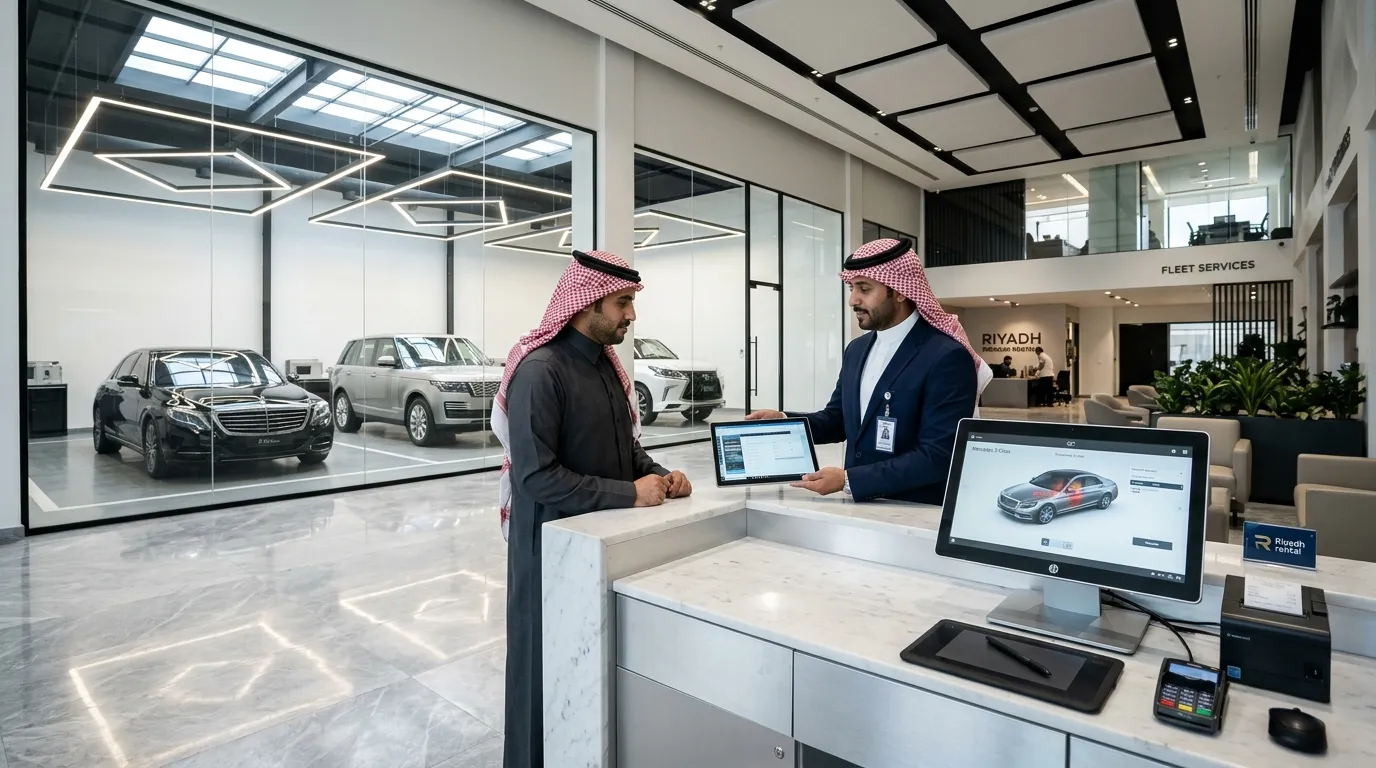
Lot attendants were equipped with rugged mobile tablets running the WaslaSoft Mobile Handback module. The checkout process cannot proceed to key release until the attendant completes an 8-point inspection checklist:
- High-resolution photographs of front bumper, rear bumper, driver side, passenger side, roof, windshield, interior upholstery, and odometer/fuel cluster.
- Every photograph is watermarked with an unalterable digital timestamp, GPS coordinates, and vehicle chassis number (VIN).
- Any existing scratches or dents are highlighted on an interactive 3D vehicle wireframe.
- The customer reviews the condition gallery on a customer-facing tablet screen and provides a digital signature.
Upon vehicle return, the tablet loads the original check-out photos side-by-side with the current live camera view. If a new dent is detected, the software calculates estimated body shop repair costs based on standard insurance labor tables and flags the exact amount for customer authorization before departure.
Within five months of deploying this architecture, the airport fleet operator reduced damage dispute losses by 88.6%, recovered over SAR 38,000 in previously lost mileage overages, and operated with 100% clean audits across all TGA Wasl roadside inspections.
Managing ZATCA Phase 2 E-Invoicing on Extended and Aborted Rentals
Under the regulations of the Saudi Zakat, Tax and Customs Authority (ZATCA), vehicle rental transactions require strict adherence to electronic tax invoicing standards. The core accounting challenge lies in the dynamic nature of rental durations:
Security Deposit Accounting Separation: A critical compliance trap in car rental accounting is treating customer security deposits as taxable revenue. A deposit is an escrow balance sheet liability, not a sale. If an operator generates an invoice for SAR 3,000 (comprising SAR 1,500 rental fees and SAR 1,500 deposit), they improperly inflate their 15% VAT liability to ZATCA by SAR 225. WaslaSoft strictly separates rental revenue from security deposit holds, ensuring that ZATCA Phase 2 E-Invoices are generated only for legitimate taxable rental services, excess mileage, and fuel surcharges.
Handling Mid-Trip Rental Extensions: When a customer calls to extend a rental from three days to seven days, WaslaSoft handles the accounting dynamically:
- The system checks whether the existing card pre-authorization hold is sufficient to cover the extended rental charges.
- It queries the TGA Wasl API to push an official contract amendment and extend the digital Tafweez authorization date.
- It generates a sequential electronic tax invoice for the incremental four days, complete with the mandatory ZATCA cryptographic stamp and QR code, transmitting the PDF invoice directly to the customer email or WhatsApp.
- Handling Early Vehicle Returns and Credit Notes: If a customer books for ten days but returns the vehicle on day four due to changed travel plans, the software calculates the unused six-day balance. It automatically adjusts the final invoice total and generates a certified ZATCA electronic credit note linked directly to the original contract invoice UUID, ensuring that the company VAT return reflects the exact net revenue earned without manual accounting journal adjustments.
Practical Implementation Checklist for Gulf Car Rental Operators
To eliminate revenue leaks and achieve flawless fleet compliance, follow this phased operational implementation plan:
Direct TGA Wasl API Integration:
- Decommission all standalone web portal workflows. Connect your central POS and reservation management system directly to WaslaSoft's certified TGA Wasl interface to automate electronic contract generation.
- Enforce mandatory Yakeen / Absher driver verification before issuing any electronic driving authorization.
Transition to Pre-Authorization Escrow Holds:
- Discontinue collecting cash or standard debit card swipes for security deposits.
- Configure your payment terminal architecture to process pre-authorization card holds with a rolling 14-day automated settlement window to capture delayed Saher radar fines.
Deploy Digital Tablet Inspection Checklists:
- Replace paper condition sheets with mobile tablet check-in/check-out.
- Enforce the 8-point mandatory photo inspection protocol with GPS and timestamp watermarking to defeat fraudulent damage chargebacks.
Automate Odometer and Fuel Reconciliation:
- Establish contractual overage mileage rates (e.g., SAR 0.60 to SAR 1.20 per km) in the master vehicle catalog.
- Require attendants to photograph the instrument cluster at return, allowing the system to compute exact excess kilometer billing automatically.
Strict ZATCA Phase 2 Separation of Escrow and Revenue:
- Audit your accounting chart of accounts to ensure security deposits are classified as short-term liabilities rather than taxable operating revenue.
- Ensure all contract adjustments, early terminations, and extensions generate linked ZATCA electronic credit and debit notes.
The Bottom Line: Protecting Vehicle Assets with Intelligent Fleet Point of Sale
A commercial car rental operation is a capital-intensive logistics business where profitability depends on turning high asset utilization into cash flow. Your branch agents should spend their shifts welcoming corporate travelers, matching customers with premium vehicles, and providing excellent mobility service—not arguing over pre-existing bumper dents, absorbing uncollected traffic camera citations, or manually copying driver numbers into disconnected government portals.
By replacing disconnected cash registers and manual paperwork with WaslaSoft's unified fleet POS architecture—integrating automated TGA Wasl contracts, banking pre-authorization escrow, 8-point digital photo damage capture, and ZATCA Phase 2 tax compliance—you insulate your balance sheet against losses and secure your fleet operating margins.
Discover how WaslaSoft POS for Retail and Fleet Management and WaslaSoft Multi-Branch ERP help car rental operators and mobility providers across Saudi Arabia, the UAE, and Oman to eliminate balance sheet bleed. Schedule an operational demo with our mobility systems specialists today.