If your salon manager spends the first three days of every month locked in a back office with paper appointment books and an Excel sheet trying to calculate stylist commissions, you are actively manufacturing staff turnover.
In the high-end beauty salon and wellness industry across Riyadh, Jeddah, and Dubai, your primary asset is not your Italian marble reception desk or your designer shampoo displays. Your asset is your creative talent: your master colorists, nail artists, skin therapists, and makeup specialists. Yet walk behind the scenes of almost any busy salon on the 28th of the month, and you will find the same poisonous atmosphere: senior stylists arguing with the receptionist over whether Mrs. Al-Hassan booked her balayage through Instagram or called the salon directly, whether tips paid on the card machine were deducted from credit card processing fees, and why three high-value bridal packages were missing from their commission calculations.
When commission math is opaque, delayed, or error-prone, stylists do not complain politely. They pack their scissors, message their personal Instagram client list, and move to the salon two blocks away, taking SAR 40,000 in monthly recurring revenue with them.
In this guide, we break down the operational mechanics of building transparent stylist commission tiers, eliminating multi-service bridal split disputes, stopping weekend appointment no-shows, and controlling color bar chemical product waste.
The Four Structural Blindspots in Salon Operations
Most salon owners come from creative backgrounds. They understand aesthetics, hospitality, and trend cycles. But commercial salon profitability depends on four rigid mathematical problems that manual notebooks and generic retail cash registers cannot solve.
1. The Multi-Therapist Service Split
Consider a typical Friday afternoon booking at a luxury salon in Riyadh. A customer walks in for a complete evening preparation package valued at SAR 2,200. The service involves:
- Senior Hair Colorist: Root touch-up and toner (SAR 900).
- Junior Hair Stylist: Blowout and Hollywood waves (SAR 350).
- Nail Technician: Russian gel manicure with chrome finish (SAR 450).
- Spa Therapist: Express glow facial (SAR 500).
In a basic cash register, this transaction is rung up as a single line item: "VIP Evening Package - SAR 2,200." Who gets the commission? In manual salons, the front desk assigns the entire invoice to the colorist because she was the first to greet the client, leaving the nail technician and facial therapist feeling cheated. Alternatively, the manager attempts to manually split the ticket on a paper notebook at 10:30 PM, making calculation errors that poison team morale.
2. The 22% Weekend No-Show Plague
Thursday and Friday are the financial backbone of GCC salons. High-margin services like full balayage, hair extensions, and keratin treatments require two to four uninterrupted hours of a senior stylist's schedule.
When a client books a four-hour slot on Thursday at 4:00 PM and fails to show up, the damage is severe. The stylist sits idle for four hours. Walk-in clients are turned away because the calendar appeared fully booked. In our benchmark audit of salons in Saudi Arabia and the UAE, uncontrolled appointment books suffer from an average no-show rate of 22.4% on weekends, representing thousands of riyals in unrecoverable chair time.
3. The Unmeasured Chemical Color Bar Bleed
Hair coloring chemicals (tubes of tint, bleaching powders, bond rebuilders, and developers) represent the single largest variable supply cost in hair care.
In salons without digital formula tracking, stylists mix chemicals by visual guesswork. A stylist squeezes 85 grams of expensive tint into a mixing bowl when the client's hair length required only 55 grams. The unused 30 grams cannot be saved; it oxidizes and gets rinsed down the sink. Across a ten-chair salon running twenty color services daily, this invisible product waste bleeds between SAR 4,000 and SAR 7,500 every single month.
4. Card Terminal Tip Pooling Friction
With over 85% of Gulf retail and salon transactions paid through debit cards (Mada in KSA, debit cards in UAE), cash tips have vanished. Clients now add tips directly on the point-of-sale card terminal.
If your software cannot isolate card tips and assign them directly to the specific stylist's digital wallet on the spot, those tips get pooled into the gross business revenue. When the salon owner attempts to distribute tips at month-end after deducting merchant bank fees, stylists immediately suspect bad faith.
Field Implementation Case Study: 2-Branch Luxury Ladies Salon (Riyadh)
To examine how automated systems resolve these issues, review our deployment for a premier ladies salon and day spa operating two locations in northern Riyadh (Al-Nakheel and Al-Sahafa).
The Starting Baseline
The business employed 22 stylists, nail technicians, and spa therapists across both locations. They utilized a basic cloud POS that handled appointment bookings and receipt printing, but lacked commission intelligence, automated deposit processing, and color bar inventory management.
The operational pain points were acute:
- Payroll Delay: The general manager spent four full days at the end of each month auditing manual paper logs and building custom Excel spreadsheets to calculate tiered commissions.
- Staff Turnover: Two senior colorists had quit within six months, citing commission calculation discrepancies and delayed bonus payments.
- No-Show Losses: An average of 18 prime weekend appointments were lost to no-shows each month per branch, costing an estimated SAR 28,000 in lost chair revenue.
- Color Inventory Discrepancy: Physical inventory counts at month-end revealed a 28% variance between purchased color tubes and recorded service tickets.
The WaslaSoft Architecture
We deployed WaslaSoft Beauty Salon POS across both branches, connecting the front desk reception terminal, the stylists' mobile companion tablets, and the chemical color bar:
- Automated Tiered Commission Engine: Configured graduated commission rules based on monthly service volume (e.g. 10% on first SAR 12,000, 15% up to SAR 25,000, 20% thereafter), with a distinct 10% flat commission on retail homecare product sales.
- Itemized Ticket Splitting: Every service within a package is mapped to its specific specialist at checkout, calculating individual commission cuts instantly.
- Interactive WhatsApp Booking Deposits: Online bookings and high-value weekend phone appointments require a tokenized Mada/Apple Pay deposit. Automated WhatsApp confirmations allow clients to confirm or reschedule with one click 24 hours prior.
- Color Bar Gram-Scale Linkage: A digital Bluetooth scale at the color mixing station records the exact formula weight per client, logging product usage directly against the customer file.
Commission Calculation: Manual Excel vs. Real-Time WaslaSoft Engine:
• Old Manual Workflow:
Customer Pays at Reception → Paper Ticket Filed in Folder → Manager Audits 400 Receipts at Month-End → Manual Excel Formulas → Stylist Disputes and Distrust
(Processing Time: 4 Days | Error Rate: 8.5% | Staff Morale: Low)• WaslaSoft Automated Engine:
Service Completed → Ticket Split at Checkout → Real-Time Commission and Card Tip Allocated to Stylist Digital Wallet → Instant Mobile Notification to Stylist
(Processing Time: Instant / 12 Minutes at Month-End | Error Rate: 0.0% | Staff Morale: High)
What Went Wrong: The Al-Sahafa Card Tip Walkout Threat
Real technology deployments in fast-paced salon environments always encounter human friction. Documenting what failed during our second week of rollout provides the most instructive lesson for salon managers.
At the Al-Sahafa branch, three senior European and Arab hair stylists requested an immediate private meeting with the salon owner, threatening a collective walkout before the busy Thursday evening shift.
The source of the conflict was gratuity allocation. Under the new POS system, customers were happily tapping their cards to add 10% and 15% tips on the counter terminal. However, the front desk receptionist, unfamiliar with the new tip assignment prompt, had been clicking the "General Salon Pool" button rather than attributing each tip to the individual stylist who performed the service.
When the stylists checked their mobile app dashboards that Thursday morning, their tip balances showed zero, despite having served high-profile VIP clients who had explicitly stated they tipped generously on the card terminal. The stylists assumed the new software was designed to pocket their gratuities into the salon's bank account.
How We Solved the Crisis
We immediately implemented two procedural and technical safeguards:
- Mandatory Stylist Attribution Prompt: We modified the POS checkout workflow so the payment terminal cannot process a tip without an explicit, mandatory prompt requiring the cashier to tap the photo and name of the servicing stylist (or split it among the team).
- Shift-Level Cashier Reconciliation: At the end of every morning and evening shift, the receptionist prints a "Shift Gratuity Audit" signed by both the receptionist and the shift floor lead. Stylists receive an instant push notification on their phones: "You received a SAR 150 card tip from Mrs. Noura."
Transparency dissolved the tension immediately. The stylists saw their balances update in real-time, trust was restored, and the walkout was avoided.
The Four Pillars of Profitable Salon Management
To scale a salon from a single boutique to a multi-branch regional brand, management must establish structured protocols across four core areas:
1. Transparent, Tiered Commission Motivation
Flat commission models (e.g. paying 15% on everything) fail to incentivize peak performance. Top stylists quickly realize that working harder produces linear, modest gains.
A graduated tiered structure changes the psychology:
- Base Tier (SAR 0 to SAR 12,000): 10% commission. Covers the stylist's baseline workstation overhead and guaranteed salary.
- Growth Tier (SAR 12,001 to SAR 25,000): 15% commission. The stylist begins earning meaningful extra income.
- Master Tier (SAR 25,001+): 20% commission. Senior stylists are intensely motivated to upsell treatments, recommend deep conditioning therapies, and retain their clients.
Because WaslaSoft calculates these tiers dynamically in real-time, stylists can see their progress bar on their mobile app: "You are SAR 1,200 away from reaching the 20% Master Commission tier this month." This gamification turns stylists into proactive business partners.
2. Protecting Chair Time with Tokenized WhatsApp Deposits
The traditional habit of taking phone bookings on paper calendars with zero deposit is financial suicide during weekend shifts.
WaslaSoft introduces an automated commitment funnel:
- When a client books an appointment requiring more than 60 minutes, the system sends an instant branded WhatsApp message with a secure Mada / Apple Pay deposit link (e.g. SAR 100 for hair services, SAR 250 for bridal packages).
- Exactly 24 hours prior to the appointment, an interactive WhatsApp reminder is dispatched with two buttons: [Confirm Appointment] or [Reschedule].
- If the client clicks [Reschedule], the slot opens automatically on the salon booking calendar, and the system alerts the waitlist. If the client fails to show up without 4 hours notice, the deposit is credited against the chair reservation fee, compensating the stylist for lost time.
3. Digital Color Bar Inventory Control
High-end hair color tubes (L'Oréal Professionnel, Wella, Davines, Schwarzkopf) cost between SAR 35 and SAR 70 per tube wholesale.
By linking a precision digital Bluetooth scale to the WaslaSoft POS:
- When a colorist selects "Full Head Balayage - Level 9 Honey Blonde" on the mixing station tablet, the system displays the recommended formula: 40g Tube 9.1 + 60g 20-Volume Developer + 10g Bond Rebuilder.
- The stylist pours the bowl directly on the digital scale. The scale confirms the weight and deducts the exact grams from back-office inventory.
- If a stylist consistently uses 40% more product than formula standards, the manager identifies whether the stylist needs technical retraining or if product is being diverted.
4. Retail Cross-Selling Incentives
Retail hair and skin care products carry 45% to 60% gross profit margins, yet retail sales account for less than 5% of revenue in most Gulf salons because stylists focus entirely on services.
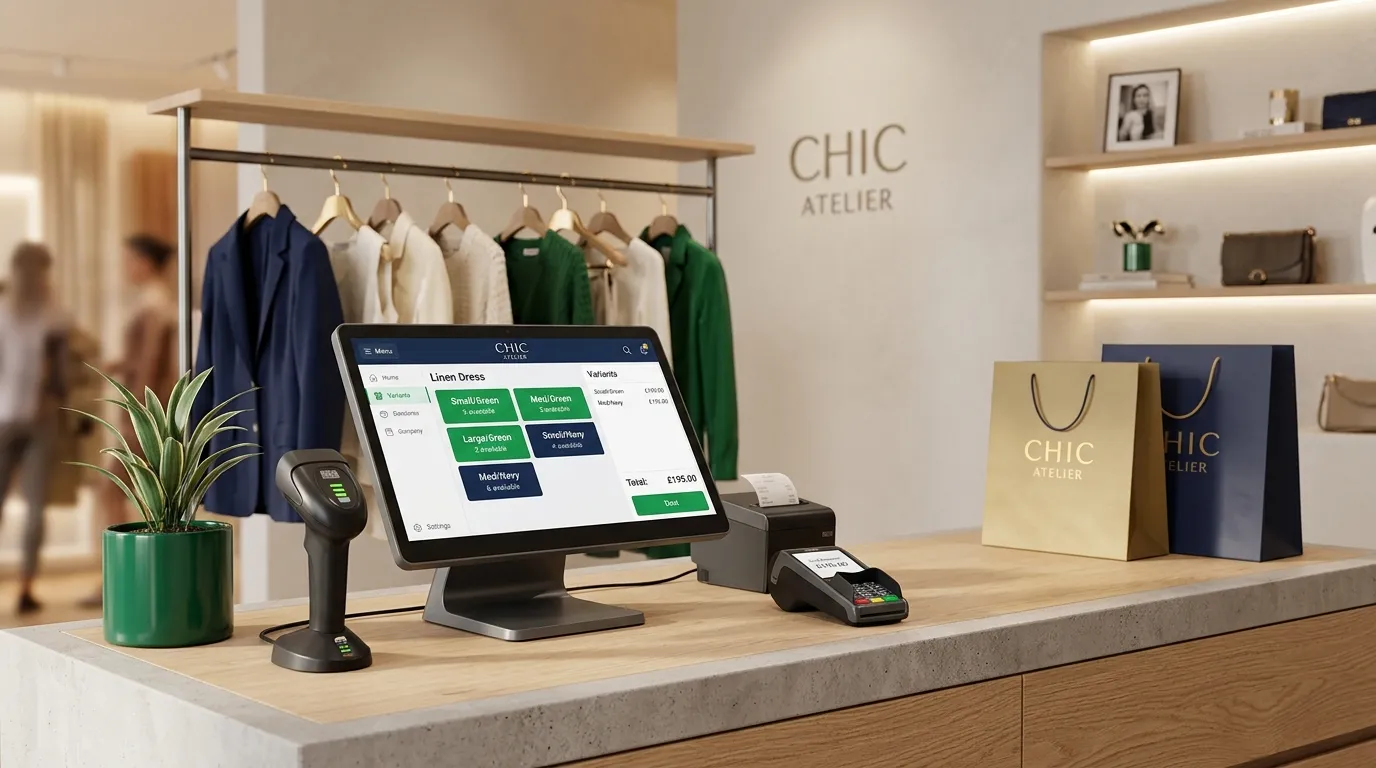
WaslaSoft allows salons to establish an independent retail commission rate (e.g. 10% on shampoo, masks, and styling serums). When a stylist finishes a blow dry, she taps the recommended homecare regimen on her mobile tablet. When the client reaches the reception desk, the recommended products appear on the customer-facing checkout screen. In our partner salons, this feature alone elevated retail product sales from 4% to 16% of total salon turnover within ninety days.
Measurable Results After 90 Days
After running WaslaSoft across both Riyadh branches for three months, the operational impact was decisive:
| Metric Measured | Before WaslaSoft | With WaslaSoft Salon POS | Net Operational Impact |
|---|---|---|---|
| Month-End Payroll Calculation | 4 full business days | 12 minutes | 99% reduction in admin overhead |
| Weekend Peak No-Show Rate | 22.4% | 2.1% | Chair utilization jumped to 96% |
| Stylist Commission Disputes | 12 to 16 disputes / month | Zero disputes | Total transparency eliminated friction |
| Chemical Color Bar Waste | 28% unrecorded variance | 4.2% variance | Saved SAR 4,800 / branch monthly |
| Retail Product Sales Share | 3.8% of total revenue | 14.6% of revenue | High-margin retail revenue quadrupled |
| Average Client Rebooking Rate | 31% within 6 weeks | 58% within 6 weeks | Automated WhatsApp reminders drove retention |
For additional operational insights across related service sectors, explore our specialized guide on laundry order tracking and garment management and our foundational principles of POS payment reconciliation and settlement audits.
5 Steps to Professionalize Your Salon Operations
If you are ready to modernize your salon operations and build an environment where top talent thrives, follow this deployment sequence:
- Publish Clear Commission Rules: Document your tiered commission percentages, retail incentives, and multi-service split rules in writing. Never change commission rules retroactively mid-month.
- Switch to Digital Real-Time Dashboards: Give your stylists access to their individual daily sales, tip allocations, and commission progress on their own smartphones. When staff see their numbers daily, mistrust disappears.
- Institute a Strict 24-Hour Deposit Policy: Require nominal tokenized deposits for any appointment longer than 60 minutes or scheduled after 4:00 PM on weekends. Real clients respect professional booking policies.
- Digitize Your Color Mixing Bar: Place a digital scale in the dispensary. Require stylists to log formulas by gram weight rather than freehand pouring.
- Enforce Shift-Level Tip Audits: Require front desk staff and shift supervisors to reconcile card tips at the close of every shift, ensuring gratuities belong securely to the creative talent who earned them.
Final Verdict
A successful beauty salon or luxury spa is not an art studio supported by accident; it is a high-precision service business driven by exceptional human talent.
When you manage your business with paper notebooks, manual spreadsheets, and opaque commission guesses, you alienate your most profitable employees and bleed money through missed appointments and chemical waste. By implementing automated commission tiers, transparent multi-stylist ticket splits, WhatsApp appointment locks, and digital color bar controls, you create a stable, predictable, and highly profitable enterprise where master stylists stay, grow, and build your brand for years to come.